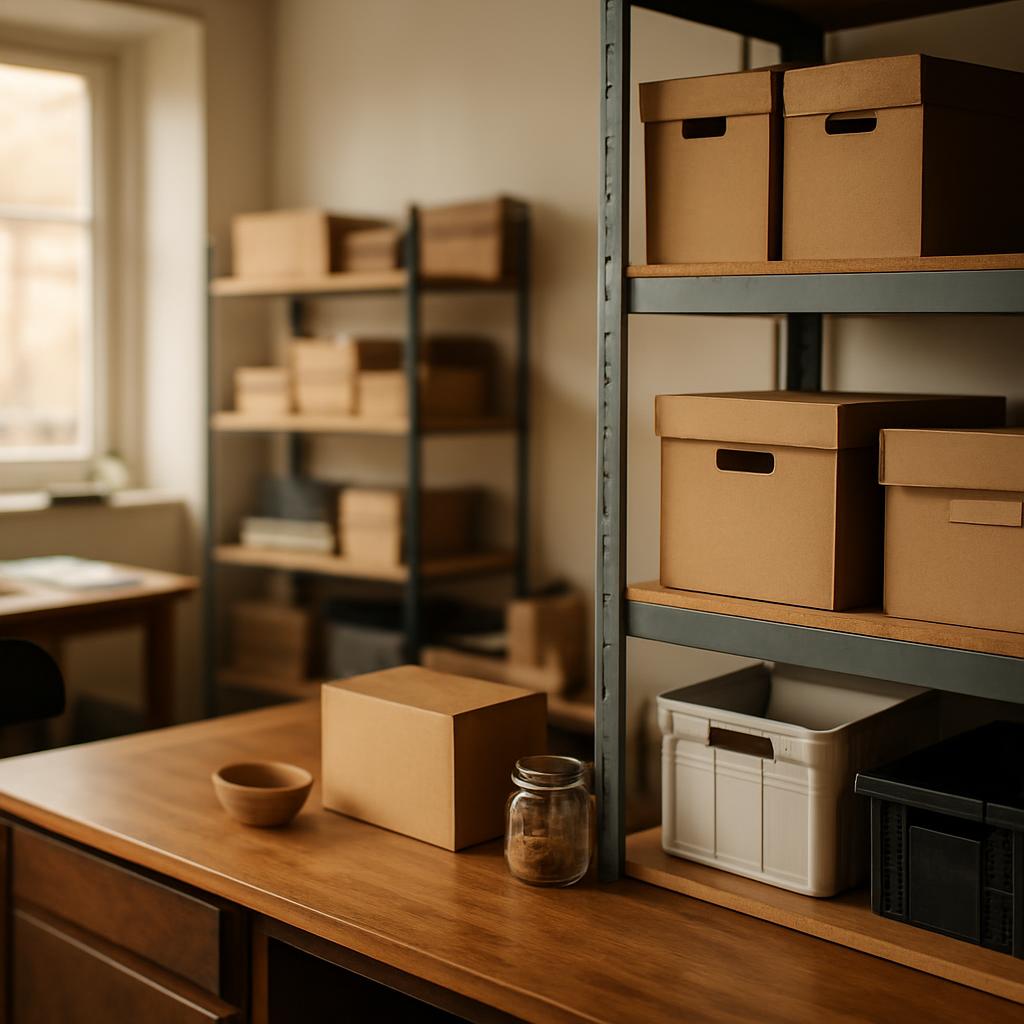
How Wyke Businesses Store Differently—and What Homeowners Miss
Find Out More →Walk down Bradford Road on any given week and you'll spot delivery vans, stock rotations, seasonal displays being swapped in and out. Local businesses in Wyke don't just throw things in a storage unit and forget about them. They treat self storage like a working part of their operation—and that mindset shifts everything. Most homeowners approach it the opposite way: storage feels like failure, a place where things go to be forgotten. That's the real difference. And honestly, borrowing a bit of that business thinking could transform how you use self storage too.
Why Businesses Treat Storage as Active Space
Here's the thing: a business can't afford for storage to be static. Stock needs to move in and out regularly. Seasonal items have to be accessible. Inventory gets tracked. There's a reason for everything being there, and usually a deadline for it leaving.
Homeowners often treat storage as a black hole. You rent a unit, fill it, and mentally shelve the problem. But businesses think of their storage unit as part of their workflow. Items are labelled, organized by frequency of use, and there's an actual system for finding what you need without rummaging through boxes for twenty minutes.
That shift in perspective is worth stealing. When you start viewing your self storage unit as an extension of your home—not a dumping ground—you naturally keep better track of what's inside. You're more intentional about what goes in. You're less likely to duplicate items because you can actually find what you already have. Find out more about how local business owners approach this mentally, because that foundation changes everything that comes next.
How Do Businesses Actually Organize Their Storage?
Organization isn't optional when you're running a business out of self storage—it's survival. Most local operations use a system: categories, clear labelling, a rough map of where things live inside the unit, and rotation patterns that make sense.
The most practical lesson here is simple: if you can't quickly identify what's in a box or bin without opening it, you're doing it wrong. Businesses use labels, colour coding, or numbering systems. A small notebook kept at home (or a photo on your phone) listing what's in each box takes maybe thirty minutes to create and saves hours of frustration later.
Seasonal rotation matters too. Holiday decorations, winter sports gear, summer garden furniture—these items go through predictable cycles. Businesses keep frequently-needed stock near the front and rarely-touched items toward the back. You can do exactly the same thing. Read more here about how space arrangement actually works when you think about your own household needs the same way.
What's the Real Cost Benefit?
This is where the business logic gets interesting for homeowners. Businesses calculate storage costs against the value of the space they're freeing up at their main premises. That calculation is usually worth it—unused retail floor space or cramped office areas cost money too.
For homeowners, the maths is slightly different but the principle holds. Self storage makes sense when it solves a genuine problem: you've got items you need to keep but not right now, your home is genuinely too small for everything you own, or you're in transition (moving, renovation, life change). Where people waste money is renting storage for things they'd be better off selling, donating, or simply throwing away. Businesses are ruthless about this because they pay per square foot. You should be too.
The other hidden saving? Not having to buy a bigger house or move to somewhere with more space just because you've accumulated things. For families in Wyke who've outgrown their current place but aren't ready to move, a self storage unit often costs a fraction of what you'd spend stretching your budget to the next property size up. See how this calculation changes things in this guide.
How Can You Actually Start Using Storage Like This?
Start small and be intentional. Before you rent a unit, write down exactly what's going in and why. Give it a timeline—seasonal items have obvious cycles; inherited furniture might have a 'decide by' date; hobby equipment might live there for a season or two while you figure out if you're really using it.
Label everything. Seriously. Use a marker and masking tape, or invest in a label maker. A few minutes now saves you countless trips back to the unit trying to remember where you put something.
Keep a running list. Photos of box contents, a spreadsheet, even a notebook in your kitchen drawer—whatever system you'll actually maintain. Businesses do this because they have to. You should do it because it actually works.
Set a review date. Once or twice a year, think about what's actually still needed. This isn't about guilt—it's about freeing yourself from paying rent on things that stopped serving you years ago.
If you're ready to put this into practice, Self Storage Wyke makes it simple. We've got unit sizes that suit everything from seasonal rotation to serious decluttering, and the facility is designed with the kind of access and organization that make the business-style approach actually feasible. Come by and have a chat about what you need.
Looking for Self Storage near Wyke?
We have secure, flexible units available in the area. Get in touch with Self Storage Wyke today.
Find Out More →