What Wyke Business Owners Know About Storage
Find Out More →Walk into most homes in Wyke and you'll find the same thing: a garage stuffed with boxes nobody's opened in three years, a shed that's become a graveyard for old garden furniture, a spare bedroom that's slowly turning into a junk room. But talk to the people running local businesses around here—the ones who've actually had to solve the storage problem properly—and they approach it completely differently.
That difference isn't accidental. It's the result of needing to make storage work on a budget, to get things back quickly when they're needed, and to stop wasting money on space that isn't earning its keep. There's a lot homeowners can borrow from that mindset. And honestly, it'll change how you think about what you actually need to store.
Why Businesses Treat Storage Like an Investment, Not a Dumping Ground
Most homeowners treat storage as a place to throw things they're not sure about. Businesses can't afford that luxury. When someone's running a small operation in Wyke—whether it's a tradesperson, a retail business during seasonal stockpiling, or a service provider managing overflow—every pound spent on storage has to justify itself. That means they get ruthless about what actually goes in, how long it stays, and what condition it's kept in.
They also rotate stock. A business using storage doesn't just dump everything and forget about it. They know what they've stored, they access it regularly, and they get it out when it's no longer needed. That's the opposite of the home setup where you pack boxes and hope you never have to think about them again.
The result? They spend less overall. Not because storage is cheap—it isn't—but because they're not paying for dead weight. Every item in that unit has a reason for being there, and a timeline for leaving.
How Do You Actually Know What to Store?
This is where businesses get smart in a way most homeowners don't. Before anything goes into storage, a business owner asks themselves: Will I actually use this? When? How often? What does it cost to store versus replacing it? And crucially—am I keeping it just in case, or do I genuinely know I need it?
At home, we tend to ask none of those questions. We keep the camping gear we used once five years ago. We hold onto old kitchen equipment we might need someday. We store seasonal decorations in case we decide to decorate next year (we don't). Before deciding what deserves storage space, be honest about whether you'll actually reach for it. If the answer is "maybe" or "probably not"—it's taking up real money.
The business approach is simple: if you haven't accessed it in 12 months and you're not expecting to, it leaves. That single rule cuts storage costs in half for most households.
Organisation Isn't Optional—It's the Whole Point
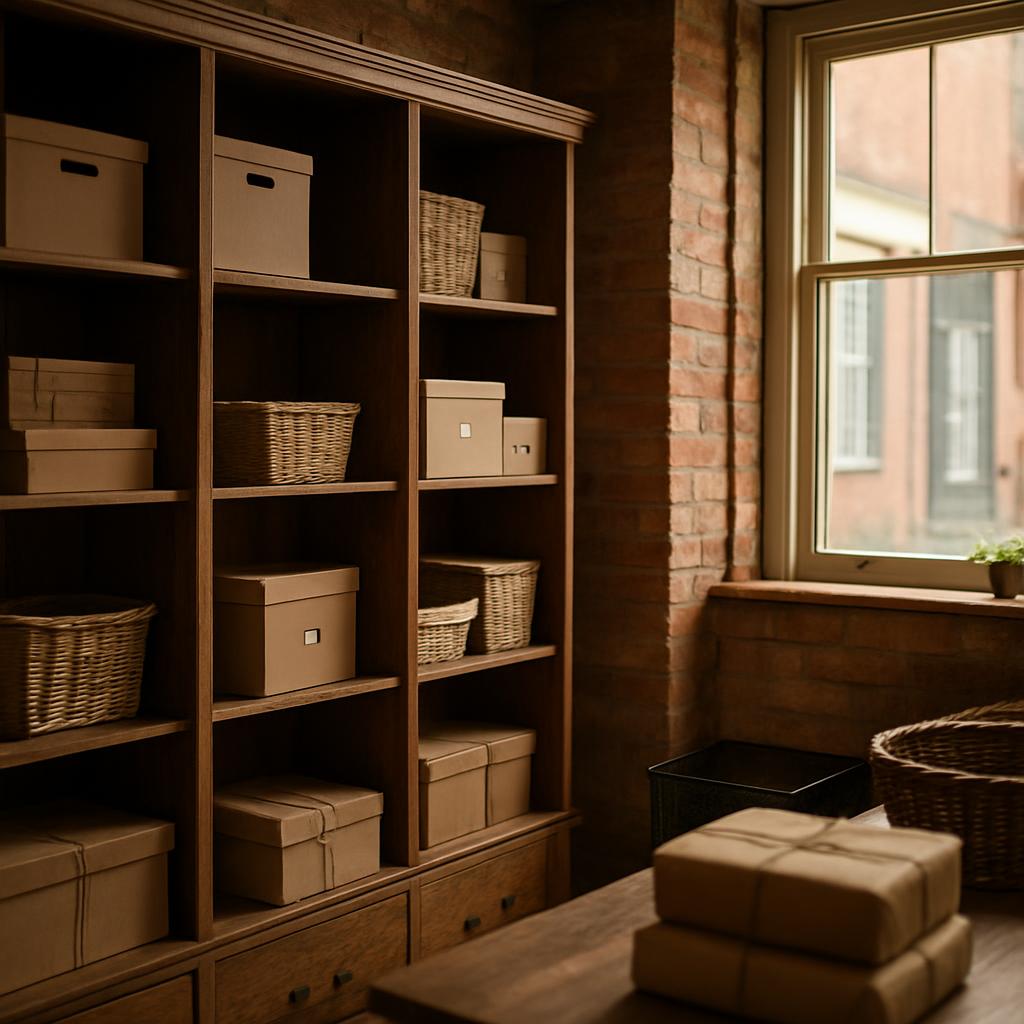
Step into a business storage unit and you'll notice something immediately: everything's labelled, everything's accessible, and nothing's piled haphazardly. That's not obsessive—it's practical. When you're paying for space, retrieving something shouldn't take an hour of digging through boxes. It should take five minutes.
Most homes? Complete chaos. Boxes stacked without labels. Items shoved in without any system. You can't remember what's where, so you just leave it all in there and add more boxes on top.
You don't need to go full inventory system at home, but you do need basics: label everything clearly, keep frequently accessed items toward the front, stack logically instead of randomly, and don't bury something you might need. The way you organise your storage determines whether it actually works for you. A poorly organised unit costs you time every time you need something, and it makes you second-guess whether you've got what you think you've got.
When to Actually Use Self Storage Wyke (And When Not To)
Here's the thing businesses in Wyke understand: storage should solve a real problem, not create a new one. They use it when they've genuinely run out of space at home or work, when seasonal items need somewhere to sit, when they're between moves, or when they're holding stock. They don't use it as an excuse to avoid making decisions.
For homeowners, that means thinking clearly about what you're actually solving for. Are you mid-renovations? Moving? Downsizing? Running a small side business? Those are genuine reasons to rent a unit. Are you just avoiding throwing things away? That's not a reason—that's expensive procrastination.
The businesses getting good value from Self Storage Wyke know exactly why each thing is there, and they have a date in mind for when it won't be anymore. That's the difference between storage as a tool and storage as a hiding place for indecision.
If you're ready to actually sort your space properly, it's worth spending half an hour working out what you genuinely need to store and why. Then get in touch with Self Storage Wyke and ask about what space would actually work for you. They'll help you figure out whether you need it for three months or three years—and make sure you're not paying for more than you actually use.
Looking for Self Storage near Wyke?
We have secure, flexible units available in the area. Get in touch with Self Storage Wyke today.
Find Out More →